

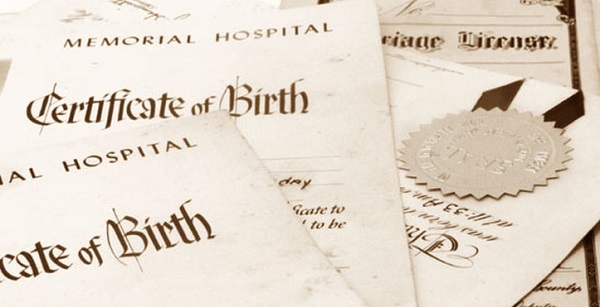
If your birth certificate is in a different language from the official language of the country you intend to work, live, study or get married in, it will need to be translated. A birth certificate is a legal document that is often requested for identity purposes. When it is translated, it needs to be a professional translation. If you are asked for a birth certificate translation, you will need to make sure the document is accurately translated, and this is what a professional translator can do.
Getting your birth certificate translated is usually mandatory if you are applying for employment and residence visas in many countries, as well as if you have lived long enough in a country to become eligible to apply for citizenship or naturalisation. In many countries, access to government services depends on producing a birth certificate, so if the certificate was issued in another country that uses a different language, a translation will be required.
Qualities of a professional translator
Here are some qualities of a professional translator:
-
Linguistic expertise, meaning the translator has a level of fluency that allows them to work in the languages they translate at a near-native level.
-
Awareness of changes in language, as languages evolve over time and a professional translator needs to understand relevant developments.
-
Attention to detail, which is essential for translating a birth certificate accurately, with careful checking and rechecking to ensure all details are correct.
-
Pride in their work and a commitment to maintaining and improving translation quality.
A professional translator knows how to translate your birth certificate
A birth certificate needs to be translated by a professional translator so it matches the format of the original document. It needs to include all information shown on the original, including seals and stamps. If there is information on the birth certificate that cannot be clearly read or interpreted, the translator will note this in the translation. This allows the person requesting the translation to see that all legible information has been translated.
In addition, birth certificate translations usually need to be certified. A certified translation includes a signed statement from the individual translator confirming their professional certification and proficiency in both the source and target languages, and that they are competent to translate the document.
Differences in terminology used on birth certificates between countries also need to be understood by the translator so they can be accurately rendered in the requested language. A professional translator will have experience working with these variations, while a less experienced translator or an automated translation tool may struggle to translate such terms accurately.
Birth certificates and birth certificate translations are commonly required in the following situations:
-
submitting an application for a place at a school or university;
-
applying for a driver’s licence for the first time;
-
registering a marriage or filing an application for divorce;
-
sports registration where there is a minimum age requirement;
-
applying for a passport to enable overseas travel;
-
applying for a pensioner card, as it shows the applicant’s age;
-
opening a bank account or applying for a loan.
When a government department or other organisation in Australia requires a birth certificate translation and the original document is not in English, the birth certificate holder will usually need to provide a translation completed by a professionally certified translator.

